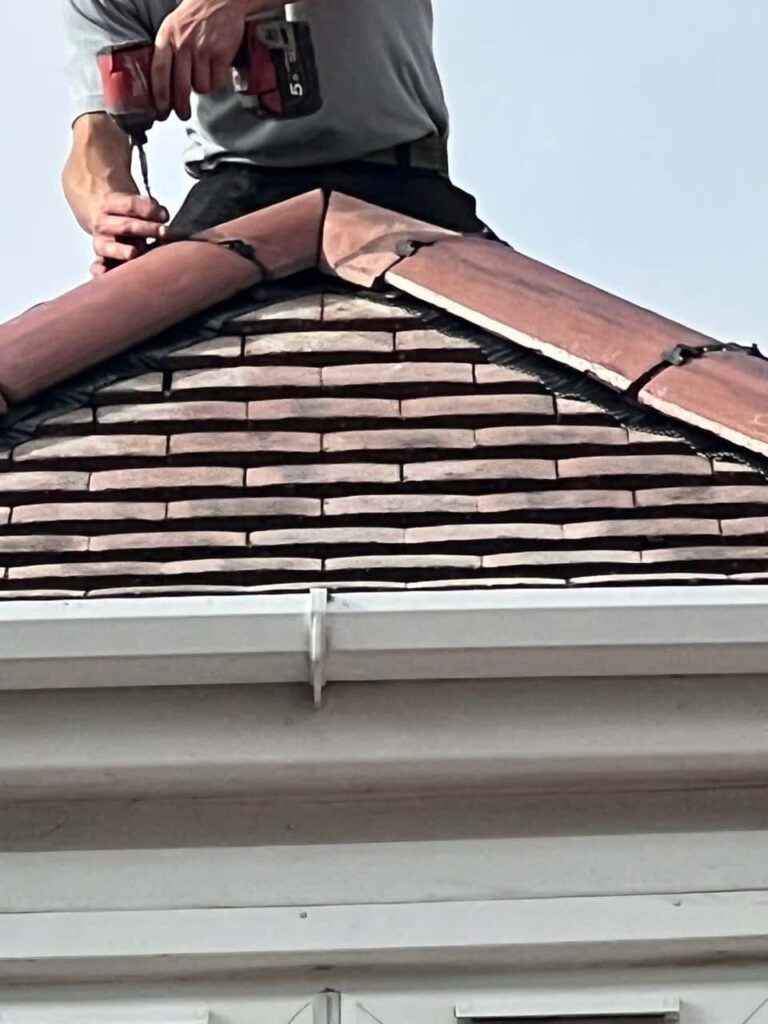
A leaking roof can begin as a relatively small defect, but once rainwater is able to pass beneath the main roof covering, the effects may extend beyond the original entry point. Moisture can travel through the roof structure, reach insulation, appear on ceilings or walls and affect areas some distance from the external defect.
This is why effective roof leak repairs involve more than treating the first visible sign of water. The source of the leak needs to be identified, the condition of surrounding roofing materials assessed and the appropriate repair completed so that the roof can once again shed water effectively.
For property owners in Amersham, Buckinghamshire, prompt professional attention can help prevent a localised roofing defect from developing into a wider moisture problem. The key is to repair the cause rather than simply dealing with the internal symptoms.
Why Is Prompt Roof Leak Repair Important?
Water ingress can become progressively more disruptive when the original opening remains exposed to repeated rainfall. Even a relatively small defect may allow moisture to reach other components beneath the roof covering.
Professional roof leak repairs can help by:
- Identifying the actual point of water entry
- Repairing damaged or displaced roofing materials
- Assessing surrounding tiles, slates and junctions
- Checking flashing and other vulnerable details
- Restoring the continuity of the roof covering
- Preventing repeated rainfall from entering through the same defect
- Identifying nearby deterioration that may contribute to the leak
- Reducing the opportunity for moisture to spread further
- Distinguishing localised damage from wider roof deterioration
- Addressing the cause rather than simply covering internal water marks
The sooner the entry point is correctly identified and repaired, the less opportunity there is for repeated water ingress to affect a wider area.
A Small Roof Leak Can Affect More Than One Area
The size of an internal damp mark does not necessarily indicate the size of the external roofing defect.
A relatively small opening may allow enough water into the roof to create noticeable internal staining.
Once beneath the covering, moisture does not always travel directly downwards.
It can move along roofing components before eventually reaching a point where it becomes visible inside the property.
This means even apparently minor leaks deserve proper investigation.
Water Can Travel Away From the Entry Point
One of the challenges of roof leak repairs is that the internal evidence may not sit directly beneath the external defect.
Water can follow the roof structure, travel along surfaces or move around obstacles before appearing on a ceiling or wall.
As a result, repairing the roof immediately above a damp patch may not resolve the problem.
Professional leak investigation considers how water could be travelling through the roof before determining where the repair is actually required.
The Visible Damp Patch Is Usually a Symptom
Internal staining is useful evidence that moisture has entered the property, but the stain itself is not the roofing problem.
Painting over a mark or treating the internal surface does nothing to stop further rainfall entering through the roof.
The external cause must be corrected first.
Once the source has been repaired and the affected area has had an opportunity to dry appropriately, the internal condition can then be considered separately.
Stopping further water entry is the priority.
Missing Tiles Can Leave the Roof More Exposed
A missing roof tile creates an obvious weakness in the primary covering.
The materials beneath may provide some secondary protection, but they are not intended to replace an effective outer roof covering indefinitely.
Repeated rainfall reaching these areas can increase the opportunity for moisture to find a route further into the roof.
Replacing the missing tile and checking the surrounding covering can restore protection where the problem is genuinely localised.
Slipped Tiles Can Create Less Obvious Openings
A tile does not need to disappear completely to create a problem.
A slipped or displaced tile may leave part of the roof beneath it exposed.
From ground level, the movement may appear relatively minor, yet the resulting opening can be enough to allow wind-driven rain beneath the covering.
Professional repair should consider why the tile moved as well as repositioning or replacing it.
This is particularly important where neighbouring tiles show signs of movement too.
Cracked Tiles Can Allow Water Beneath the Covering
Cracks can vary considerably in severity.
Some may remain superficial, while others compromise the tile sufficiently to allow moisture through.
A visibly damaged tile should therefore be assessed rather than ignored simply because it remains in position.
Where replacement is required, the surrounding tiles should also be checked.
If several nearby tiles are deteriorating, repairing only the most obvious one may not provide a complete solution.
Slate Movement Can Also Lead to Water Ingress
Slates rely on appropriate positioning and secure fixing to maintain an effective roof covering.
When a slate slips, cracks or becomes displaced, the area beneath it can become vulnerable.
One affected slate may be a straightforward local repair.
Repeated movement across different parts of a slate roof can indicate that the wider condition needs further assessment.
The repair should therefore match the scale and cause of the problem rather than simply addressing what is visible from outside.
Flashing Is a Common Area to Investigate
Not every roof leak originates from the tiles or slates themselves.
Roof junctions require suitable detailing to prevent water entering where different surfaces meet.
Flashing can therefore be an important part of leak investigation.
If flashing becomes damaged, displaced or deteriorated, moisture may enter around an otherwise serviceable roof covering.
Where the defect is localised, professional flashing repair may stop the leak without unnecessary work elsewhere.
Chimney Areas Need Careful Assessment
Water appearing internally near a chimney does not automatically prove where the external defect is located.
Several roofing details may be present around the chimney area, including flashing and surrounding tiles or slates.
Professional inspection can assess these components together.
This is more reliable than assuming the first visible defect must be responsible.
Correct diagnosis is especially important around roof junctions because water can enter at one point and become visible somewhere nearby.
Ridge and Hip Areas Can Contribute to Leaks
Ridges and hips are prominent parts of many roofs and remain exposed to changing weather conditions.
Deterioration or movement in these areas can sometimes contribute to water ingress.
The appropriate response depends on the extent of the defect and the condition of surrounding components.
A localised problem may require only focused repair.
If deterioration is distributed across a larger section, the assessment may need to consider the area more comprehensively.
Flat Roof Leaks Also Require Root-Cause Diagnosis
Flat roofing can develop leaks for a variety of reasons, including localised deterioration, damaged details or problems around junctions.
Visible water inside the property does not automatically identify which part of the external covering has failed.
The affected roof needs to be inspected systematically.
Simply applying material to the most obvious surface area without understanding the defect can leave the original route of water ingress unresolved.
Professional diagnosis helps keep repairs focused on the actual problem.
Wind-Driven Rain Can Expose Vulnerable Areas
Some roof leaks only become noticeable during particular weather conditions.
Rain combined with strong winds can be driven beneath roofing components that may not leak during lighter rainfall.
This can reveal slipped tiles, damaged junctions or other weaknesses.
A leak that appears only during demanding weather should not automatically be dismissed because it stops when conditions improve.
The opening that allowed water through may still remain.
Repeated Rainfall Can Extend the Affected Area
One episode of water ingress may leave a relatively small area damp.
If the defect remains unrepaired, later rainfall can introduce more moisture through the same route.
The affected area may gradually become larger as materials repeatedly become wet.
This is one reason timely repair matters.
Stopping additional water entry gives the affected parts of the property the opportunity to dry rather than continually receiving further moisture.
Roof Leaks Can Affect Materials Beneath the Surface
The visible roof covering is only the outer part of the roof.
Once moisture passes beneath tiles, slates or another covering, it can reach additional components.
The extent depends on the location and duration of the leak.
Professional roof repair aims to prevent further water from entering before the problem becomes more widespread.
Where moisture has already travelled internally, the affected areas may also need to be assessed according to their condition.
Insulation Can Be Affected by Water Ingress
Where insulation is positioned beneath or near the leaking area, moisture may reach it before obvious staining appears in occupied rooms.
The extent of any effect depends on how much water has entered and for how long.
This is another reason internal ceiling marks should not be treated as the only measure of a leak’s significance.
The roof space can provide useful evidence when assessing how far moisture has travelled.
Timber Components Should Not Be Repeatedly Exposed to Moisture
Roof structures commonly contain timber elements.
An isolated brief exposure does not automatically mean significant deterioration has occurred, but persistent water ingress should not be allowed to continue unnecessarily.
Repeated wetting can create conditions that are undesirable for timber and other building materials.
Repairing the external defect stops further rainfall entering through the same opening and helps prevent ongoing exposure.
Ceiling Stains Can Appear After the Leak Has Been Present for Some Time
A roof defect may exist before any obvious internal sign becomes visible.
Moisture may initially remain within the roof space or affect concealed materials.
Only when enough water reaches the internal surface may a stain appear.
This means a newly noticed ceiling mark does not necessarily indicate that the roof started leaking that day.
Prompt investigation can help determine the likely source and prevent additional rainfall from worsening the situation.
A Growing Damp Mark Deserves Prompt Attention
If an internal stain becomes larger following rainfall, this provides useful evidence that water ingress may still be active.
Continuing to monitor the mark without investigating the roof allows the problem to repeat.
Professional assessment can trace the likely entry route and identify the roofing components requiring attention.
The objective is to interrupt the cycle of repeated wetting before the affected area expands further.
Recurring Leaks Often Mean the Cause Needs Reassessment
A leak that returns after previous work should be investigated carefully.
This does not automatically mean the entire roof needs replacing.
The original source may have been incorrectly identified, or a nearby component may also be contributing.
Water movement can make leak diagnosis difficult, particularly around complex roof details.
A systematic assessment is therefore more useful than repeatedly treating the same internal location.
Several Leaks May Indicate a Wider Roofing Problem
One leak can often result from one local defect.
Multiple leaks occurring in unrelated areas can present a different picture.
If different sections of the roof are allowing water through, the covering may be experiencing more widespread deterioration.
Professional assessment can determine whether separate local repairs remain appropriate or whether the roof needs to be considered more broadly.
The extent of deterioration should guide the recommendation.
Professional Repairs Focus on the Cause
Effective roof leak repair is not simply about making the internal damp patch disappear.
The external cause needs to be identified and corrected.
This may involve replacing a damaged tile, securing displaced roofing materials, repairing flashing or addressing another local defect.
Once the source has been stopped, further rainfall should no longer be entering through that particular weakness.
This is what helps prevent the associated water damage from continuing to spread.
Surrounding Roofing Materials Should Be Checked
A leak may originate from one visibly damaged component, but nearby materials can provide important context.
If one tile has slipped because of a local isolated issue, repairing it may be sufficient.
If several neighbouring tiles are loose or deteriorating, the repair may need to address a slightly wider area.
Checking surrounding materials reduces the likelihood of treating one symptom while overlooking closely related defects.
The Condition of Previous Repairs Can Be Relevant
Where a roof has been repaired previously, those areas may form part of the investigation.
A sound previous repair may have no connection with the new leak.
Alternatively, deterioration may have developed around an older repair or adjacent materials.
The repair history helps build a clearer picture of the roof’s condition.
This is particularly useful where water ingress has occurred more than once.
A Roof Leak Does Not Automatically Mean a New Roof Is Needed
Finding water inside a property can understandably create concern, but many leaks are localised.
One damaged tile, isolated flashing defect or small area of deterioration can often be repaired without replacing an otherwise serviceable roof.
Replacement becomes a different consideration when deterioration is widespread or repeated problems occur across several sections.
Professional assessment helps distinguish between these situations and keeps the proposed work proportionate.
Early Repairs Can Help Keep a Local Problem Local
The practical advantage of dealing with a roof leak promptly is that it reduces the opportunity for repeated rainfall to expand the affected area.
A defect that currently involves one small section of roof may remain manageable if the source is identified and repaired.
If the same opening continues admitting water, additional materials can become affected.
Early attention cannot reverse damage that has already occurred, but it can prevent further water entering through the repaired defect.
Temporary Internal Measures Do Not Repair the Roof
Buckets, containers or other temporary measures may help manage dripping water inside the property, but they do not address the external cause.
Likewise, covering a ceiling stain does not stop moisture entering.
These measures deal only with the consequences.
The roof itself needs to be assessed and repaired if the water ingress is to be stopped properly.
DIY Roof Access Can Create Additional Problems
Attempting to locate a leak by climbing onto the roof is not a sensible approach for an inexperienced property owner.
Apart from the difficulty of identifying water entry accurately, walking across roofing materials can cause additional damage.
Tiles and slates can be vulnerable to inappropriate foot traffic.
A professional inspection allows the roof to be assessed using suitable methods while reducing the risk of creating further defects during the investigation.
Internal Evidence Can Help With Leak Diagnosis
Although the internal damp patch may not reveal the exact external entry point, it still provides useful information.
Its location, size and relationship with roof features can help guide the inspection.
The roof space may provide additional clues regarding water routes.
Combining internal observations with external roof assessment can create a clearer understanding than relying on either one alone.
The Roof Should Be Viewed as a Complete System
A roof leak may appear to involve one tile, but successful weather protection depends on several components working together.
The covering, junctions, flashing and associated details all contribute.
Professional leak investigation considers these relationships.
This helps identify situations where an obvious defect is genuinely responsible and situations where the problem originates from another nearby component.
Professional Roof Leak Repairs Can Reduce Repeat Problems
A properly diagnosed repair addresses the route through which water is entering.
This is important because repeat leaks are often associated with an unresolved cause rather than simply the visible internal symptom.
By inspecting the affected area and surrounding roof components, professional roofers can determine the appropriate scope of work.
The objective is to restore effective protection rather than repeatedly react to the same damp patch.
Ongoing Roof Maintenance Can Help Identify Developing Weaknesses
Not every roofing defect produces an immediate leak.
A tile may begin moving, flashing can deteriorate or a small crack may develop before water becomes visible indoors.
Addressing developing defects can help prevent them from progressing to active water ingress.
This does not mean every roof requires constant repair.
It simply highlights the value of responding when visible deterioration or other warning signs begin appearing.
Professional Assessment Helps Avoid Unnecessary Work
A visible roof leak can make the problem seem extensive, particularly where internal staining has spread.
However, the external defect may still be relatively localised.
Professional assessment helps determine the true scale of the problem.
Where a focused repair is sufficient, work can remain limited to the affected area.
Where deterioration is more widespread, the recommendation can reflect that broader condition.
This avoids assuming either that every leak is minor or that every leak requires major roofing work.
Roof Leak Repairs in Amersham, Buckinghamshire
For property owners in Amersham, Buckinghamshire, professional roof leak repairs can help stop a local roofing defect from allowing repeated water ingress to affect a wider area.
At LS Roofing Amersham, we can assess the likely source of the leak, inspect surrounding roofing materials and determine the appropriate repair based on the actual condition of the roof.
Whether the cause involves damaged tiles, slipped roofing materials, flashing or another localised defect, the priority is to identify where water is entering and address that weakness correctly.
Where the surrounding roof remains serviceable, repairs can remain targeted. If the inspection reveals deterioration across a wider area, this can be considered as part of the overall assessment.
Conclusion
Professional roof leak repairs can stop water damage from spreading by identifying and repairing the point where rainfall is entering the roofing system.
This is important because water does not necessarily remain directly beneath the original defect. It can travel through the roof space and affect materials away from the entry point before becoming visible as damp patches, staining or dripping water.
A leaking roof does not automatically require extensive work. Many problems remain localised and can be addressed through targeted professional repairs. The important step is identifying the true cause rather than treating only the internal symptoms.
If you have noticed signs of a roof leak at your property in Amersham, Buckinghamshire, contact LS Roofing Amersham. We can assess the affected area, identify the likely source of water ingress and recommend an appropriate repair to help prevent the problem from spreading further.
Call us on: 01494 302 495
Click here to find out more about LS Roofing Amersham
Click here to complete our contact form and see how we can help with your roofing needs.